6 Interior Design Tips to Seamlessly Blend TV Mounting in El Paso into Your Living Room

A television is often the largest visual element in a living room, which makes its placement an interior-design decision as much as a technical one. Mount it too high and the screen can dominate the room. Place it awkwardly and furniture may feel disconnected. Hide it too aggressively and everyday viewing becomes inconvenient.
The best TV installation works with the architecture and furniture already in the room rather than treating the screen as an afterthought.
Design the Seating Around the Screen
Before deciding where the television goes, look at where people actually sit. The ideal wall is not necessarily the largest empty wall; it is the one that creates a comfortable relationship between the screen and the main seating area.
When planning TV Mounting in El Paso, consider the sofa’s position, viewing distance, windows and major walkways before drilling. A beautifully mounted television can still feel wrong if viewers have to turn their heads sharply or sit directly beneath bright sunlight.
Treat the TV Wall as a Focal Point
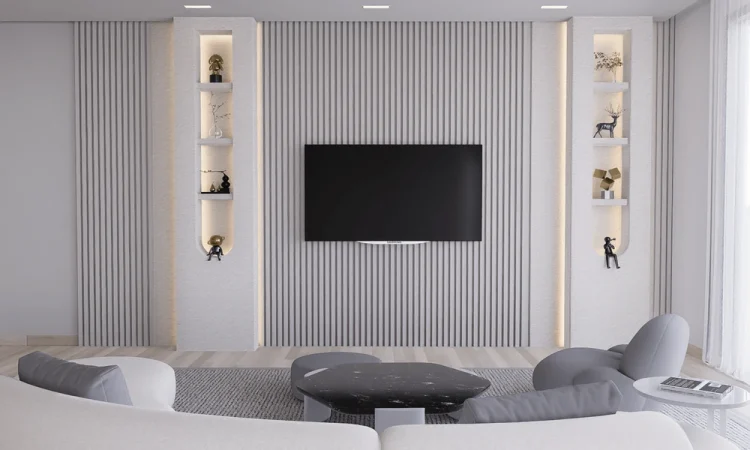
Instead of trying to make the television disappear, give the wall intentional structure. A low media cabinet, floating shelves, vertical paneling or carefully selected artwork can frame the screen without overwhelming it. The key is restraint. Too many decorative elements surrounding a black screen can make the wall look cluttered, particularly when the television is turned off and already creates a strong visual block.
Choose Furniture with the TV’s Height in Mind
A common design mistake is selecting the furniture first and mounting the TV afterward. This can result in an awkward gap between the console and screen or force the television higher than intended.
Measure the furniture and television together before installation. A low-profile console can create a cleaner, contemporary appearance, while built-ins can make the entire entertainment area feel architectural.
The television should also remain comfortable to watch from the primary seating position. Interior design should never come at the expense of viewing comfort.
Plan Cable Management Before Installation
Cable management should be considered before the bracket goes onto the wall. Depending on the property and installation requirements, wires may be concealed within the wall or routed through a suitable external management system.
This is particularly important when adding soundbars, gaming consoles or streaming devices. Planning every connection beforehand prevents the TV wall from becoming a collection of visible cables after installation.
Be Careful with Fireplace Placement
A fireplace often appears to be the obvious centerpiece for a television, but that does not automatically make it the best location. Mounting above a fireplace can create viewing-height and heat considerations, depending on the fireplace design and the manufacturer’s requirements.
If the television must go above a mantel, think about how high the screen will sit from the sofa. An articulating or pull-down mount may offer more flexibility in some rooms, but the fireplace’s heat conditions and installation requirements still need to be evaluated. Sometimes the better design solution is simply another wall.
Use Lighting to Your Advantage
A television wall should work during both movie night and daytime. Windows directly opposite the screen can produce reflections that make viewing frustrating, while strong overhead lighting can create distracting glare.
Consider the direction of natural light before finalizing the mount. Layered lighting, such as floor lamps, wall lighting or dimmable fixtures, can provide illumination without shining directly onto the screen.
Take Away
Good TV design is not about making the television invisible. It is about giving it a logical place within the room.
When screen position, seating, furniture proportions, cable management and lighting are considered together, the result feels deliberate rather than improvised. A professionally mounted TV can then become part of the architecture of the living room instead of looking like an electronic device that was simply attached to an empty wall.