What a Flooded Basement Actually Does to Your Home’s Foundation Over Time

Why Basement Water Behaves Differently Than Other Household Floods
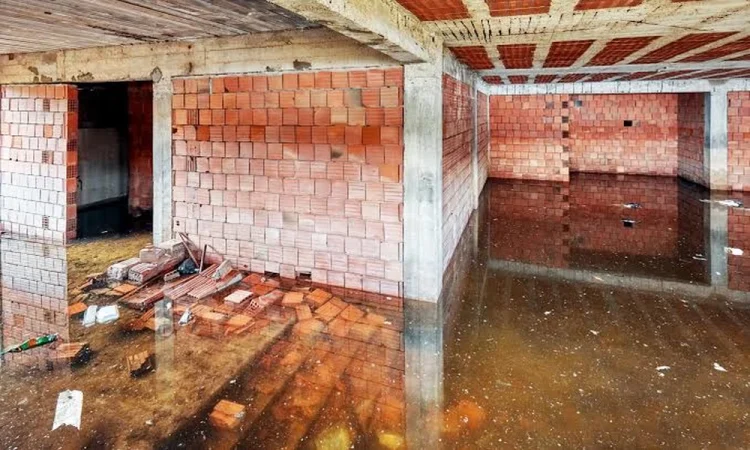
Water that enters a basement does not act like water spilled in a kitchen or bathroom. It pools against concrete walls and footings, finds gaps around pipes and electrical conduits, and settles into porous materials that were never designed to dry quickly. Because basements sit below grade, gravity and surrounding soil pressure keep pushing moisture inward long after a storm has passed. This creates a slow-motion problem rather than a single event, since water that seeped in during a heavy rain can continue migrating through concrete for days.
Homeowners often underestimate how much structural material absorbs moisture during a flood. Drywall wicks water upward far beyond the visible waterline, insulation holds saturation like a sponge, and wood framing can swell and warp before any surface mold appears. The damage that matters most is frequently invisible during the first forty-eight hours, which is exactly when people tend to assume the worst has passed. A finished basement with carpet, baseboards, and built-in shelving gives water even more material to penetrate, extending the timeline for full drying considerably. Even a slab floor that looks dry to the touch can still be releasing vapor into the air for a week or more after the original event, feeding the exact conditions mold needs to spread quietly behind walls and under flooring.
Timing, Equipment, and the Decisions That Shape Recovery Costs
The first few days after a flood determine most of what happens afterward. Standing water needs to be removed quickly, but extraction alone does not address the moisture trapped inside walls, subfloors, and framing members. This is where the gap between a do-it-yourself response and a professional one becomes obvious, since consumer-grade fans and dehumidifiers rarely move enough air or pull enough humidity to dry a basement before mold colonies establish themselves. Professional crews use industrial air movers and moisture meters to track drying progress in real time rather than guessing based on how a room feels.
Homeowners searching for guidance after a flood often land on a service page describing flooded basement cleanup because the process involves more coordination than most people expect, from water extraction through structural drying to sanitizing surfaces that stayed wet for an extended period. The sequence matters as much as the equipment. Removing water without addressing hidden moisture pockets behind drywall or beneath flooring simply delays mold growth rather than preventing it, and skipping the sanitizing step can leave contaminants behind even after everything looks dry.
Cost decisions during this window tend to compound. A homeowner who hires a crew that only extracts water and leaves drying to chance often ends up paying twice, once for the initial cleanup and again months later when mold remediation becomes necessary. Insurance adjusters also pay close attention to documentation during this period, and basements that received thorough, recorded drying tend to generate fewer disputes during claims review. Mold does not need much time to establish itself once materials stay damp, and spores already present in ordinary household dust begin colonizing wet drywall within one to two days under the right conditions. The EPA mold and moisture remediation guide outlines how quickly this process accelerates once relative humidity in an enclosed space climbs above normal indoor levels, which is precisely the environment a flooded basement creates. That timeline is part of why drying crews treat the first week as a critical window rather than a flexible deadline, and why the decisions made in that window quietly shape the repair bill that arrives months later. Homeowners who document moisture readings, photograph affected areas, and keep records of every drying step generally find the claims process far less contentious than those who rely on memory and guesswork once the paperwork arrives.