The vast industrial complexes that sprawl across Singapore’s western corridor operate under a deceptive appearance of permanence and order, yet beneath the surface of this meticulously organised city-state lies a constant battle against entropy, corrosion, and contamination that demands the continuous intervention of Industrial cleaning Singapore specialists who have mastered the demanding work of maintaining facilities where failure carries consequences measured in millions of dollars and compromised safety. This is not cleaning as most people understand it, but rather an industrial-scale operation requiring specialised knowledge, heavy equipment, and an intimate understanding of both chemistry and engineering.
The Architecture of Industrial Contamination
To comprehend the scope of Industrial cleaning Singapore, one must first understand what these professionals confront daily. Singapore’s industrial landscape encompasses petroleum refineries on Jurong Island, pharmaceutical manufacturing plants in Tuas Biomedical Park, semiconductor fabrication facilities, chemical processing plants, and massive logistics warehouses that serve as transhipment nodes for Southeast Asian trade. Each facility type generates its own characteristic contamination profile, requiring targeted remediation strategies.
Consider the petrochemical sector, where facilities process crude oil and manufacture derivatives. The Building and Construction Authority’s guidelines for industrial facilities note that these plants accumulate hydrocarbon deposits, catalyst dust, and scale formation in processing equipment and surrounding structures. Left unaddressed, these accumulations reduce operational efficiency, create fire hazards, and accelerate corrosion of expensive infrastructure. The Economic Development Board’s industrial safety reports document numerous incidents where inadequate cleaning contributed to equipment failures, some resulting in production shutdowns costing millions in lost output.
The Methodology of Heavy-Duty Cleaning
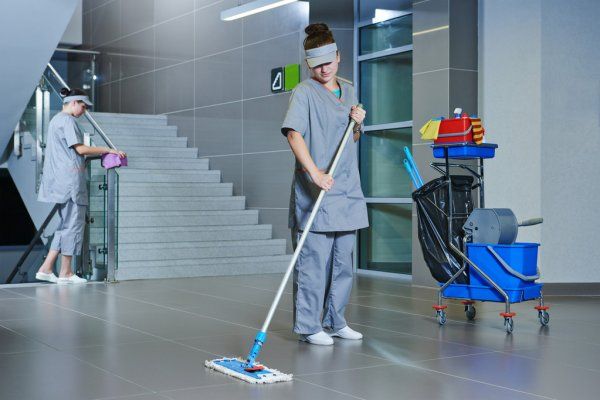
Professional industrial cleaning Singapore operates according to systematic protocols developed through decades of experience and refined by hard-won lessons. The methodology varies by facility type and contamination profile, but certain principles remain constant across applications.
Initial Assessment and Planning
Competent providers begin with thorough site assessment. This involves identifying contamination types, evaluating surface materials, assessing access constraints, and determining appropriate cleaning methods. The Workplace Safety and Health Council emphasises that proper planning prevents accidents and ensures regulatory compliance. Industrial facilities cannot simply shut down for cleaning; the work must integrate with production schedules, often occurring during brief maintenance windows where every hour of downtime carries substantial cost.
Specialised Equipment Deployment
Industrial cleaning Singapore demands equipment far beyond commercial-grade tools. The arsenal includes:
- High-pressure water jetting systems generating up to 40,000 pounds per square inch for removing stubborn deposits
- Industrial vacuum systems with explosion-proof motors for hazardous environments
- Automated scrubbing machines capable of cleaning thousands of square metres efficiently
- Chemical injection equipment for specialised degreasing and descaling operations
- Confined space entry equipment for cleaning tanks, vessels, and underground systems
- Grit blasting equipment for surface preparation and coating removal
Chemical Expertise and Application
The National Environment Agency regulates industrial cleaning chemicals strictly, requiring proper handling, application, and disposal. Professional Industrial cleaning Singapore providers maintain expertise in chemical selection, understanding which formulations work on specific contaminants without damaging substrate materials or creating hazardous reactions.
The Regulatory Landscape
Singapore’s regulatory framework governing industrial operations extends comprehensively to cleaning activities. The Environmental Protection and Management Act mandates proper disposal of industrial cleaning wastewater, which often contains dissolved contaminants, suspended solids, and residual cleaning chemicals. Facilities must treat this wastewater to meet National Environment Agency discharge standards before releasing it into public sewers or waterways.
The Workplace Safety and Health Act imposes strict safety requirements for industrial cleaning operations, particularly when work occurs in confined spaces, at heights, or involves hazardous materials. Professional industrial cleaning Singapore providers maintain rigorous safety protocols, provide comprehensive worker training, and carry appropriate insurance coverage, distinguishing them from operators who cut corners on safety to reduce costs.
Sector-Specific Applications
Different industrial sectors present unique cleaning challenges that demand specialised approaches:
Pharmaceutical and Food Processing
These facilities require cleaning that meets Good Manufacturing Practice standards. The Health Sciences Authority mandates that pharmaceutical manufacturing environments maintain specified cleanliness levels to prevent product contamination. Industrial cleaning Singapore for these sectors involves achieving validated cleanliness that meets microbiological and particulate specifications through sterile cleaning protocols and documented procedures.
Semiconductor and Electronics Manufacturing
Clean room environments demand the highest standards. A single particle can ruin an entire silicon wafer batch worth millions. Industrial cleaning Singapore for semiconductor facilities involves maintaining ISO Class cleanrooms where particulate counts per cubic metre must remain below strict thresholds.
Heavy Manufacturing and Metalworking
These facilities accumulate metal shavings, coolant residues, and scale deposits. Singapore’s precision engineering sector depends on maintaining clean production environments where contamination compromises tight tolerances. Regular industrial cleaning prevents quality issues and extends equipment life.
Chemical Processing Plants
Perhaps the most demanding sector, chemical facilities present multiple hazards: toxic residues, explosive atmospheres, and corrosive materials. The National Environment Agency requires stringent protocols for cleaning chemical processing equipment, including proper isolation, ventilation, and residue neutralisation before workers enter vessels or confined spaces.
The Economics of Prevention
Facility managers increasingly recognise that professional industrial cleaning Singapore represents not merely an operational expense but strategic investment. The Singapore Manufacturing Federation notes that preventive maintenance, including regular professional cleaning, reduces total ownership costs of industrial infrastructure. Clean facilities operate more efficiently, experience fewer breakdowns, and comply more readily with regulatory requirements.
Singapore’s industrial sector, a cornerstone of the nation’s economic success, depends fundamentally on the systematic, professional application of Industrial cleaning Singapore that maintains the complex facilities where advanced manufacturing and processing occur continuously.