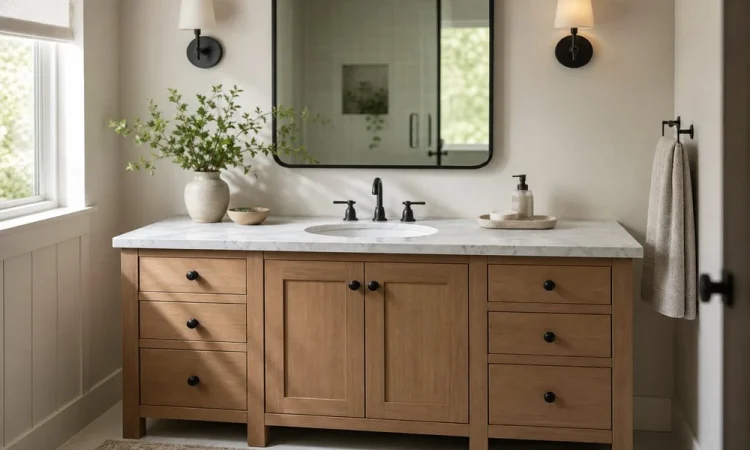
Bathroom vanity in a modern bathroom
Daily Use
The bathroom vanity holds the sink, defines the visual weight of the space, and provides the opportunity for storage. Without a vanity that fits the room and meets your storage needs, a bathroom is prone to feeling crowded and can leave you with cluttered counters instead of a serene, welcoming environment.
Think through how the room will be used, who will use it, and how the vanity can support healthy, stress-free daily routines. If the bathroom is used only by guests, for example, you might only need a small vanity to house a couple of hand towels and extra toiletries. A bathroom shared by several household members with busy morning and evening routines could call for a bigger cabinet. You should be able to easily access your daily essentials without pulling out another item first.
Storage Priorities
Before shopping, take a look at the current layout and think about the challenges the current setup creates. Do you feel like you lack adequate drawer storage? Do your countertops get buried under too many items? Does the vanity crowd the bathroom and block the door from opening fully? Do you struggle with limited counter space around the sink?
Think about how the bathroom should function to make the space work better for your daily routines:
- What toiletries and other items do you use every day? What products should be stored in the bathroom but will only be used once the products on hand have been used up? What grooming tools, hair products, hair styling equipment, and other items should be stored in the bathroom?
- Are you hoping for more drawers? Would you prefer storage behind doors?
- How much countertop space do you need?
Size and Layout
Next, consider how the vanity will fit into the bathroom and the overall design of the space. The right vanity should enhance the space and fit comfortably within the room. Avoid choosing a vanity that crowds the bathroom and overwhelms the space, leaving little breathing room to appreciate the tile work, flooring, and wall paint.
For example, even if you think that you might like the extra counter space and storage that a larger vanity could provide, a 30-inch model could provide enough storage and feel better in a compact bathroom design. You want to create an open feeling in the bathroom, not leave a sense that the space feels cluttered or overstuffed.
Mounting and Measurements
Decide whether you like the idea of a floating vanity or prefer a traditional floor-mounted unit. For local options, bathroom vanities Davie is the page that matches this. Floating cabinets provide an open look that leaves the floor exposed, which could help a small room feel more open and airy. Floor-mounted cabinets can be beautiful too, providing a grounded look and the opportunity for storage all the way to the floor.
Once you have a sense of which vanity style feels like the best fit, gather the following measurements:
- Bathroom dimensions
- Vanity depth
- The countertop overhang of the sink
- Location of plumbing
- Distance between each drawer
- How far cabinet doors open
Durable Materials
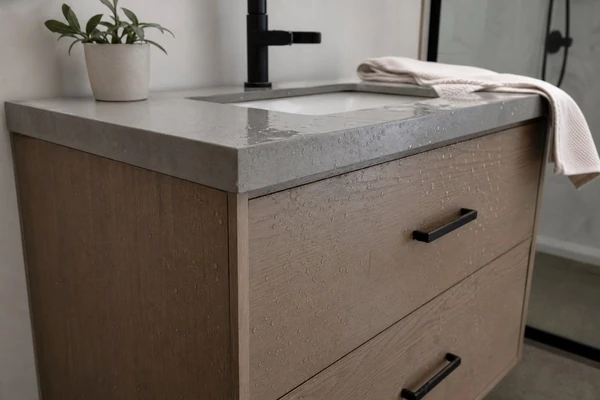
Moisture-resistant bathroom vanity materials
The vanity will be an integral part of the bathroom design, but the space also calls for durable materials and finishes. Bathrooms experience changes in humidity and temperature and are regularly subjected to splashes and washing of every kind. Look for cabinets made with moisture-resistant materials (the EPA spells this out at www.epa.gov/indoor-air-quality-iaq) and treated with a durable finish that will withstand daily life.
Wood-look cabinets can add a softening touch to a bathroom that includes lots of stone and tile, and they can be a beautiful addition to the space as long as they are durable enough to handle the humidity and daily use. Painted cabinets can offer a custom look and might work well in a light-filled bathroom that gets good ventilation, but they may be more likely to show wear and scuffs in a busier bathroom. Laminate and composite vanities offer easy maintenance, and textured surfaces can be an excellent option for adding depth and personality to a bathroom vanity.
Finishes and Cohesion
Once you have a sense of the style and size of the vanity you want to look for, start considering the countertop, sink, and other design elements. A quieter countertop finish might allow you to choose a sculptural mirror or make room for bold tile and other eye-catching design elements. If you’re working with a more restrained color palette, you could look for a more interesting counter finish to inject some personality into the space. The team at Kitchen Remodeler Davie is one local point of reference for sorting through these combinations.
You could also explore the balance of the elements. Combining complementary materials can create a curated look that feels layered and polished, like a warm wood vanity with cool-tone tile or dark hardware and accessories that bring out the brightness of a pale vanity. Look for ways to repeat design elements, like a metal finish or a specific curve, to create cohesion without matching everything.
Choose a sink and other elements in a way that supports your goals for the room. A vessel sink can make a beautiful statement but changes the height of the counter to accommodate its depth, so you’ll need to be sure you have ample space around it in your design. An undermount sink keeps the counter edge clean and offers a spot that is easy to wipe down at a glance. Gather samples of your finish and material choices and take a look at them in your bathroom, paying attention to how they change with the natural light throughout the day.